6 Hidden Dangers Of Online Training (And Why You Should Train With Us)

Online and virtual personal training continue to grow in popularity. With more workout apps, influencer programs, and remote coaching options than ever before, it’s easier than ever to start training online.
But convenience doesn’t always equal quality.
While there are excellent certified online personal trainers who provide safe and effective programming, there are also generic programs built with little personalization, minimal oversight, and no real accountability. When workouts aren’t properly designed for your body, goals, or experience level, that’s when problems can start.
Before you commit to any program, it’s important to understand the potential risks.
Here are six hidden dangers of online training, and what to look for if you want to train safely and effectively.
Key Takeaways About Online Training:
Not all online personal training programs are built with safety or personalization in mind.
A certified online personal trainer should assess you, customize your plan, and track progress.
One-size-fits-all workouts increase the risk of poor form and injury.
Lack of accountability is a major reason people quit online programs.
Overtraining without proper progression can lead to injury and serious setbacks.
Recovery and gradual progression matter more than intensity.
In-person or hybrid training can provide better support for beginners and injury concerns.
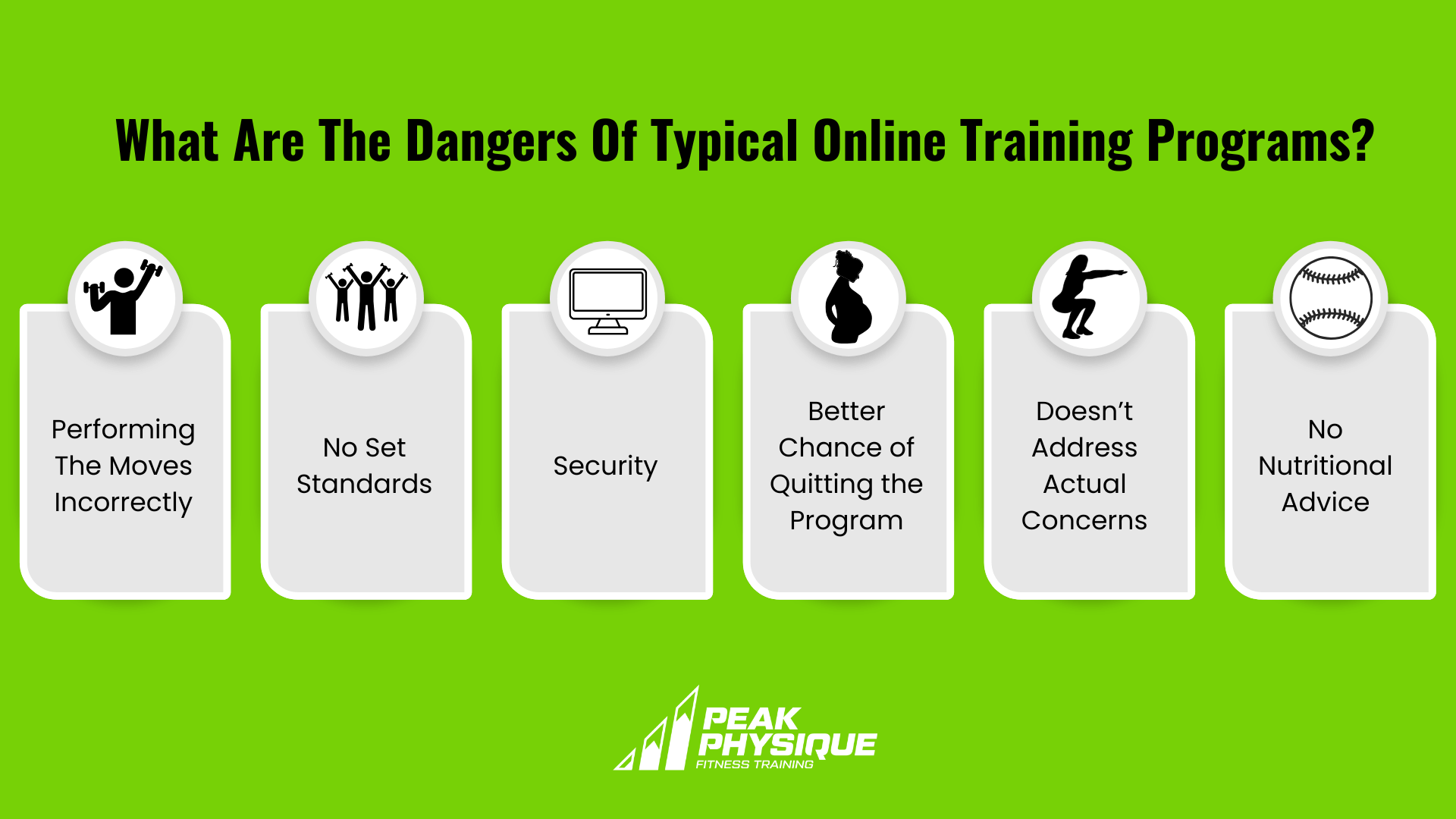
What Are The Dangers Of Typical Online Training Programs?
Not all online personal training systems and programs are built the same. Here are some of the dangers you should be aware of when starting any online training program.
1. Performing The Moves Incorrectly
When you train with a certified personal trainer, they watch how you perform the exercises and are there to correct you when you’re not doing it properly. Doing online training becomes more difficult because it’s harder to see if the moves are done correctly.
Well-trained personal trainers have ways to ensure you’re exercising safely and have the experience to help you get in the right position.
If you don’t perform the moves correctly, you could really end up hurting yourself, and that’s what makes it so dangerous for people to teach online training when they’re not a personal trainer.
2. No Set Standards
People who train online don’t typically have any set standards, so there’s no consistency in the training that’s out there. Here at Peak Physique, since we were newer to the online training craze, we signed up with Trainerize in order to ensure we’re offering a consistent experience.
We also use our years of experience and knowledge in the industry in order to provide personalized and, more importantly, safe and effective workouts to our clients that offer a similar experience as when they come into the gym and workout with us.
3. Security
Depending on the program you choose, your connection might not be secure, and that’s scary! You don’t want someone to have access to your computer camera and potentially be able to turn it on without your knowledge.
We love our clients and would never use a program that isn’t safe, secure, and simple.
4. Better Chance of Quitting the Program
Okay, so this one doesn’t seem that dangerous, but in some cases, it can be. When you do online training, you have to be self-motivating. You have to be the one to turn your computer or phone on and start the workout. Compare this to when you have a dedicated personal trainer who’s going to actually care that you’re not working out.
At Peak Physique, if you’re our client, you’re our family, and you better believe that we’re going to hold you accountable! Just because it’s online training doesn’t mean we won’t call or text you when you miss your appointment. With these general training programs out there, they don’t really care if you miss your appointments or if you stop working out.
5. Doesn’t Address Actual Concerns
If you have an area you’re trying to work on or a goal you’re trying to meet, a ‘one size fits all’ program isn’t going to address what you need. Everyone’s body is beautiful and unique, and everyone deserves a customized workout that’s going to work on what they want to work on.
This is especially true if you have an injury you need to be concerned about while working out. If you’re not working out properly, you can end up making your injury worse and not actually helping you.
At Peak Physique, we’re used to working with people who have injuries or need to rehabilitate certain body parts. I myself have my own injury! We understand the frustrations that come with injuries and are here to help you through them in a safe and supportive environment.
6. No Nutritional Advice
Sometimes, working out alone isn’t the best way to reach your fitness goals. Eating properly and exercising regularly are needed to get you to your goal. At Peak Physique, we can help advise on your diet in order to get you where you want to be.
These other online programs typically only focus on working out, burning calories, and working up a sweat. These aren’t the only ways to become healthier; your diet is just as important as how much you exercise.

What Are The Signs an Online Trainer Is Qualified?
Not all online coaches are the same. If you're considering hiring a certified online personal trainer, there are specific markers that separate professionals from influencers.
Before committing to any program, look for these necessities.
Recognized Certifications
Legitimate trainers typically hold credentials such as NASM (National Academy of Sports Medicine), ACE (American Council on Exercise), ISSA (International Sports Sciences Association), or CSCS (Certified Strength and Conditioning Specialist). These certifications require formal education and testing in anatomy, programming, and safety.
A Clear Onboarding Process
A qualified trainer should never throw you into workouts immediately. They should assess your goals, injury history, current fitness level, mobility limitations, and schedule before designing a program.
A Progress Tracking System
Effective online personal training includes measurable tracking, strength progression, mobility improvements, consistency, body composition changes, and performance benchmarks. Without tracking, there’s no structured progression.
Transparent Pricing And Expectations
Professional coaches clearly explain what’s included, how often you’ll communicate, and what level of support you’ll receive. Vague promises of “unlimited access” or “rapid transformation” without structure can be red flags.
An Emphasis On Recovery And Gradual Progression
Safe training isn’t about pushing to exhaustion every session. A qualified trainer programs rest days, mobility work, deload phases, and controlled progression. This dramatically reduces injury risk and protects against overtraining.
When a coach checks these boxes, online training can be both safe and highly effective. When they don’t, that’s where the risks increase.
When In-Person Training May Be Better
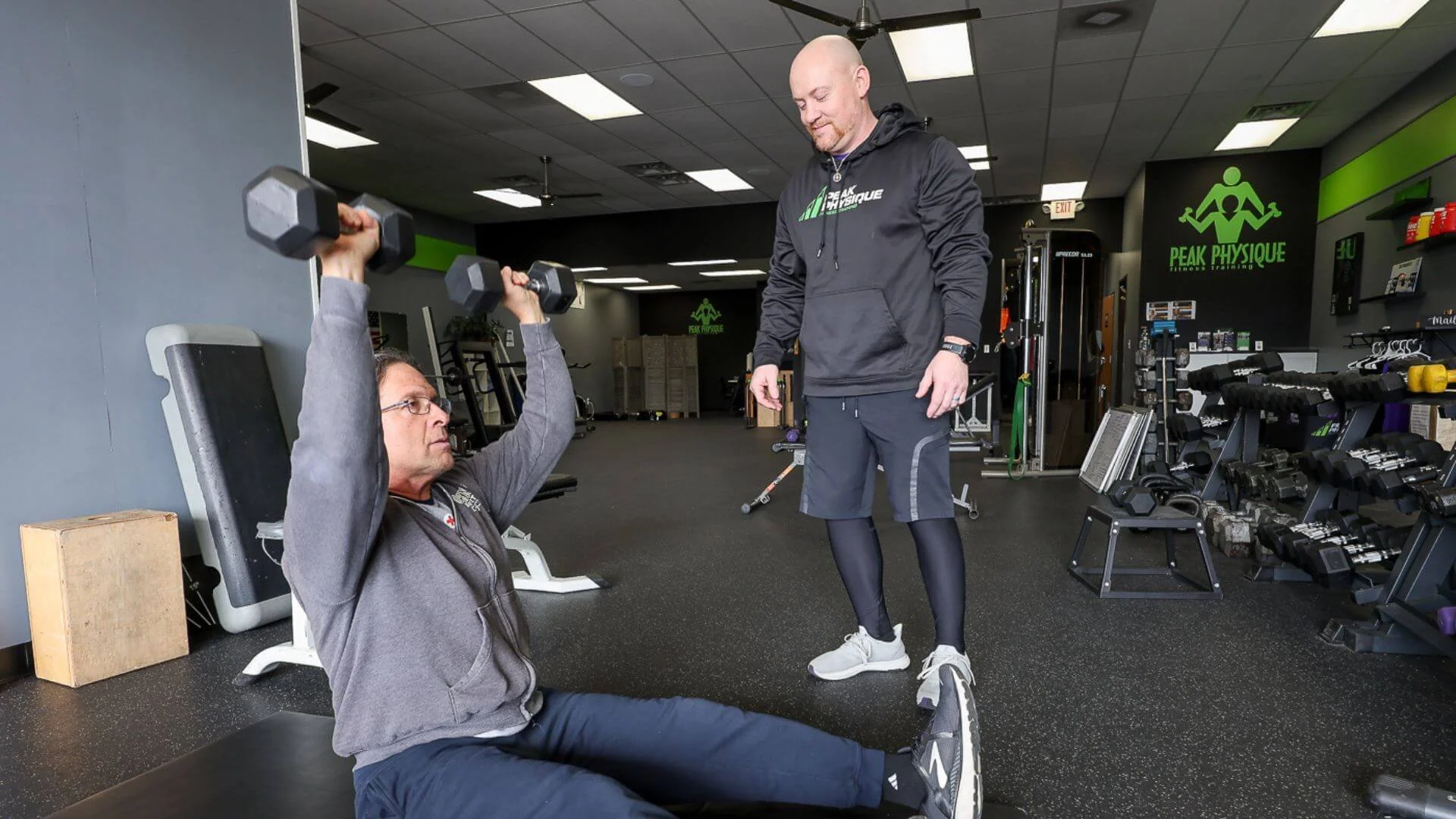
Online coaching is powerful, but it’s not always the best starting point for everyone. In some cases, in-person training provides advantages that virtual coaching simply can’t match.
Here are situations where in-person support may be the smarter choice.
Post-Injury Rehab or Chronic Pain
If you’re recovering from an injury or managing chronic joint pain, hands-on coaching and real-time adjustments are critical. Small form corrections can significantly reduce strain and accelerate recovery.
In these cases, live feedback inside a gym environment offers more precision than video-based instruction alone.
Beginners With Mobility Limitations
If you haven’t trained in years and feel stiff, unstable, or unsure how to move safely, in-person coaching builds foundational movement patterns faster.
A trainer can physically cue positioning, adjust stance width, correct posture, and modify exercises instantly.
That kind of feedback builds confidence quickly.
Complex Movement Correction
Exercises like deadlifts, squats, and overhead pressing require coordination and alignment. While video feedback helps, complex movement patterns are often refined faster face-to-face.
If your goal is mastering technique or improving athletic performance, in-person training can provide a stronger learning curve early on.
Fear or Intimidation in the Gym Environment
For some people, walking into a gym is the hardest step. In-person coaching creates structure, familiarity, and confidence within that space.
Having a dedicated coach removes the guesswork and anxiety of navigating equipment alone.
The Hybrid Approach: The Best of Both Worlds
Here’s where things get interesting.
At Peak Physique, you don’t have to choose strictly between online and in-person training. Many of our members use a hybrid model, training inside our Troy gym while also following a structured online program.
That means:
In-person sessions for movement correction and progression
Online workouts for days you can’t make it into the gym
Ongoing accountability and program updates
Flexibility without sacrificing structure
This hybrid approach blends the personalization of in-person training with the convenience of online coaching.
For many clients, it’s the most sustainable option.
Train With Peak Physique
Now that you understand the hidden dangers of online training make sure you’re being safe in your workouts. Read more about how Peak Physique can help your virtual training.
If you ever have any questions or want help with training, contact us today. If you don’t already, follow us on Facebook! We post motivating and informational content that brightens your day!
FAQ: Online Personal Training & Virtual Workouts
Is online personal training actually effective?
Yes! Online personal training can be effective when it includes proper programming, accountability, and coaching feedback. Programs that offer customized workouts, progress tracking, and direct trainer communication tend to produce better results than generic workout apps.
The key factor isn’t whether it’s online, it’s whether it’s personalized and professionally guided, like ours here at Peak Physique.
Is online training safe?
Online training is safe when workouts are designed around your fitness level, injury history, and mobility limitations. The risk increases when you follow random workouts without form guidance, progression planning, or recovery structure.
If a program doesn’t screen you first or adjust workouts based on your feedback, that’s a red flag.
What are the risks of online workout programs?
Some potential risks include:
Poor exercise form due to a lack of feedback
Overtraining or progressing too quickly
Worsening existing injuries
Generic plans that don’t match your body
Lack of accountability leading to inconsistency
Most of these risks can be reduced when working with a qualified trainer who monitors your progress.
Can you get injured doing online workouts?
Yes, especially if you:
Increase intensity too quickly
Train to exhaustion repeatedly
Use improper form
Ignore pain signals
In rare but extreme cases, overexertion can contribute to conditions like rhabdomyolysis (severe muscle breakdown). While uncommon, it highlights why structured progression and professional oversight matter; especially for beginners or those returning after a long break.
How do I choose a safe online training program?
Look for programs that:
Include an initial assessment
Offer customized programming
Provide form feedback (video review or live coaching)
Adjust intensity gradually
Have certified trainers
Encourage recovery and proper progression
Avoid programs that promise rapid transformations without considering your baseline fitness.
This article was originally published on September 11th, 2020, but was updated on February 25th, 2026, with new information.